
Business
Digital Marketing Agency Garage2Global: Helping Brands Scale in the Digital World


In a competitive online marketplace, businesses need more than basic promotion to grow. They need strategy, consistency, and measurable results. Digital marketing agency Garage2Global represents a modern approach to helping startups and established businesses expand their online presence and move confidently from local visibility to global reach.
This article explains what digital marketing agency Garage2Global stands for, its core services, benefits, and why such agencies are important in today’s digital economy.
What Is Digital Marketing Agency Garage2Global?
Digital marketing agency Garage2Global focuses on guiding businesses through every stage of digital growth. The name reflects a journey that starts small and scales strategically. The agency model emphasizes building strong digital foundations and then expanding reach through data-driven marketing.
Rather than offering one-size-fits-all solutions, this approach adapts strategies based on business goals, industry, and audience behavior.
Why Businesses Choose Garage2Global-Style Agencies
Structured Growth Approach
Many businesses struggle with scattered marketing efforts. A focused agency model brings structure by aligning branding, content, and performance marketing under one strategy.
Results-Oriented Marketing
Digital marketing agency Garage2Global typically emphasizes measurable outcomes such as traffic growth, lead generation, and conversions rather than vanity metrics.
Support for Growing Businesses
Startups and small businesses benefit from guidance that helps them avoid common digital marketing mistakes during early growth stages.
Core Services Offered
Search Engine Optimization
SEO is a foundation of digital growth. Agencies like Garage2Global work on improving website visibility through keyword optimization, technical improvements, and quality content.
Content Marketing
Content plays a key role in building trust and authority. Blogs, landing pages, and educational resources help attract and engage the right audience.
Social Media Marketing
Social platforms allow businesses to communicate directly with customers. Strategic posting, audience engagement, and performance analysis strengthen brand presence.
Paid Advertising Campaigns
Paid digital ads help businesses reach targeted users quickly. Campaigns are optimized to ensure efficient budget use and higher returns.
How Digital Marketing Agency Garage2Global Drives Growth
Audience-Centered Strategy
Understanding customer behavior is essential. Marketing efforts are designed around how users search, interact, and make decisions online.
Data and Analytics
Performance data guides every decision. Campaigns are monitored and adjusted to improve results continuously.
Brand Consistency
Consistent messaging across all digital channels builds trust and recognition over time.
Benefits of Working With a Digital Marketing Agency
Time Efficiency
Outsourcing digital marketing allows business owners to focus on operations while experts handle promotion.
Access to Expertise
Agencies bring experience across tools, platforms, and industries that may not be available in-house.
Scalable Marketing Efforts
As businesses grow, marketing strategies can scale without rebuilding systems from scratch.
Competitive Advantage
A well-executed digital strategy helps businesses stand out in crowded markets.
Common Challenges Addressed by Garage2Global
Limited Online Visibility
Many businesses struggle to be seen online. SEO and targeted advertising help solve this problem.
Inconsistent Branding
A unified digital strategy ensures brand messaging remains clear and professional.
Low Conversion Rates
Optimized content and user experience improve engagement and lead conversion.
Best Practices for Digital Marketing Success
Clear Goal Setting
Defining objectives such as traffic growth or lead generation ensures focused campaigns.
Continuous Optimization
Digital marketing is not static. Regular testing and improvement drive better outcomes.
Focus on User Experience
Fast-loading, mobile-friendly websites improve engagement and trust.
Ethical Marketing Practices
Transparency and value-driven content support long-term growth.
The Future of Digital Marketing Agencies
Digital marketing agencies will continue evolving as technology advances. Automation, artificial intelligence, and personalization will shape future strategies. Agencies that stay adaptable and people-focused will remain valuable partners for businesses worldwide.
Conclusion
Digital marketing agency Garage2Global represents a growth-focused approach to online marketing. By combining strategy, data, and creativity, it helps businesses move from early stages to broader market reach. In a digital-first world, working with a structured and results-driven agency can make a significant difference in achieving sustainable business growth.
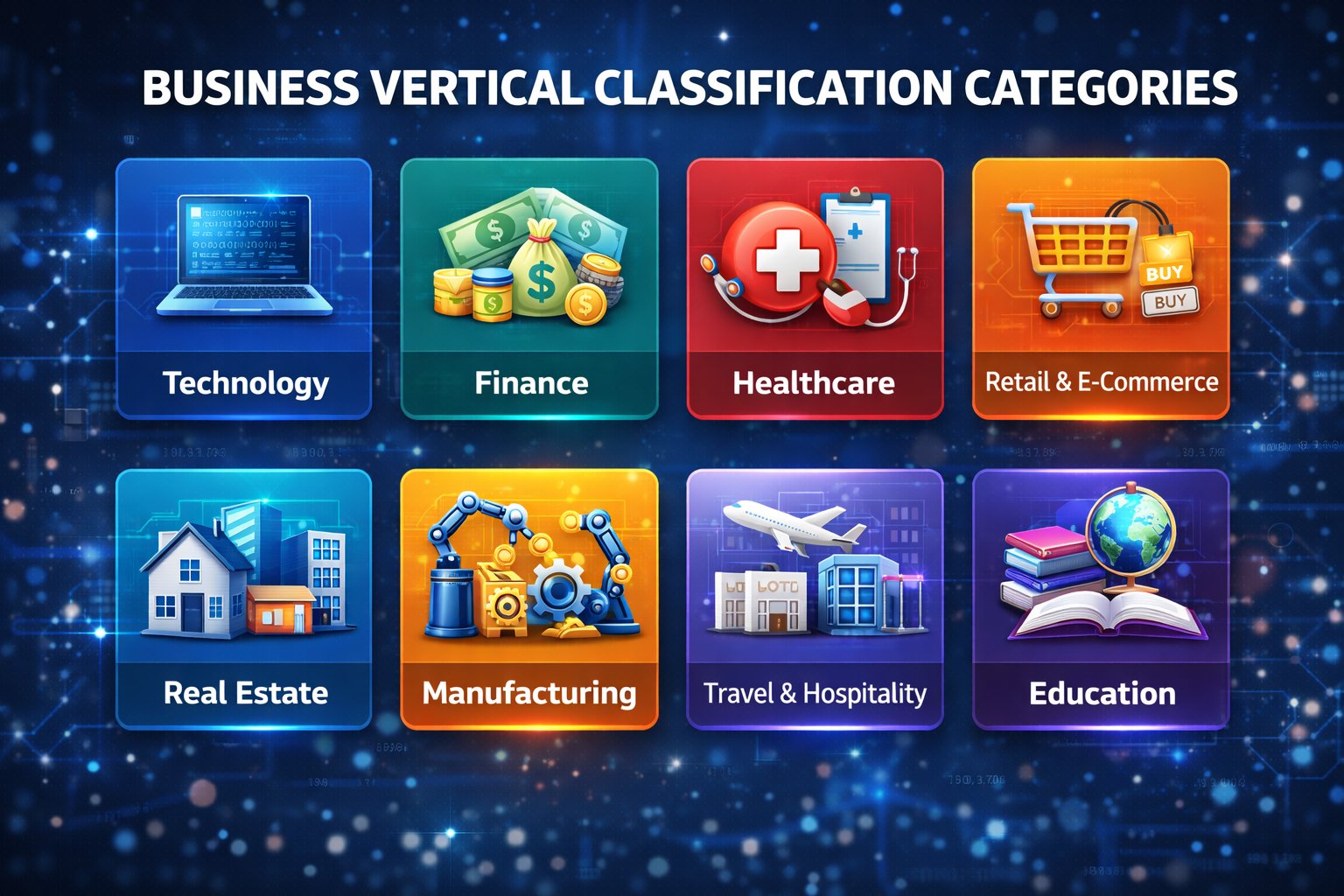
Business vertical classification categories play a crucial role in how industries are organized, analyzed, and targeted. These categories help businesses, marketers, investors, and policymakers understand how companies are grouped based on the products or services they provide. In a competitive and data-driven economy, proper classification makes decision-making more accurate and efficient.
This article explains business vertical classification categories in a simple, SEO-friendly format using short paragraphs for better readability.
What Are Business Vertical Classification Categories?
Business vertical classification categories are industry-based groupings that organize companies operating in similar markets. Each vertical represents a specific sector with shared customer needs, regulations, and operational models.
Unlike broad classifications, vertical categories focus on specialization. This allows businesses to align strategies with industry-specific challenges and opportunities.
Why Business Vertical Classification Categories Matter
Clear business vertical classification categories help organizations identify their market position. They also help customers and partners understand what a business does.

For marketers, vertical classification improves audience targeting. For investors, it simplifies market analysis. For companies, it supports clearer branding and product development strategies.
Technology as a Business Vertical
The technology vertical includes software companies, IT service providers, cloud platforms, and hardware manufacturers. Businesses in this category focus on innovation, scalability, and digital transformation.
Technology is one of the fastest-growing business vertical classification categories due to constant advancements and demand for digital solutions.
Healthcare Business Vertical
Healthcare is a highly regulated business vertical classification category. It includes hospitals, clinics, pharmaceutical companies, medical device manufacturers, and health-tech platforms.
Patient safety, compliance, and data protection are key priorities in this vertical. Technology adoption is also reshaping healthcare delivery and operations.
Finance and Banking Vertical
The finance vertical includes banks, insurance firms, investment companies, and fintech startups. Trust, security, and regulatory compliance define this category.
Digital banking and mobile payment solutions are expanding this business vertical classification category globally.
Retail and E-Commerce Vertical
Retail and e-commerce businesses sell goods directly to consumers through physical stores or online platforms. Customer experience, pricing, and logistics play a major role in this vertical.
This category has evolved rapidly due to online shopping, mobile commerce, and digital payment systems.
Manufacturing and Industrial Vertical
Manufacturing businesses produce physical goods using machinery, labor, and raw materials. This business vertical classification category includes automotive, electronics, textiles, and heavy industries.
Efficiency, quality control, and supply chain management are critical success factors in this vertical.
Education and Training Vertical
The education vertical includes schools, universities, e-learning platforms, and professional training providers. Digital learning tools have transformed how education services are delivered.
This business vertical classification category focuses on knowledge sharing, skill development, and accessibility.
Media and Entertainment Vertical
Media and entertainment include television, film, music, gaming, and digital content platforms. Audience engagement and creativity drive this vertical.
Streaming services and online content creation have expanded this category significantly in recent years.
Energy and Utilities Vertical
This business vertical classification category includes oil, gas, electricity, water, and renewable energy companies. Sustainability and environmental regulations strongly influence this sector.
The shift toward clean energy is reshaping this vertical worldwide.
Government and Public Sector Vertical
The government vertical includes public agencies, municipalities, and regulatory bodies. These organizations focus on public services, infrastructure, and policy implementation.
Transparency, accountability, and compliance are essential in this category.
How Businesses Use Vertical Classification
Companies use business vertical classification categories to tailor products and services. Software companies, for example, often create industry-specific solutions for healthcare, finance, or retail.
Consultants and analysts also rely on vertical classification to develop specialized expertise and insights.
Vertical vs Horizontal Classification
Vertical classification focuses on who the customer is by industry. Horizontal classification focuses on what service is provided across industries, such as accounting or HR software.
Understanding this distinction helps businesses position themselves more effectively in the market.
Benefits of Clear Business Vertical Classification Categories
Clear classification provides several advantages:
- Better market targeting
- Improved customer understanding
- Stronger competitive analysis
- More focused product development
These benefits lead to improved efficiency and growth.
Challenges in Classifying Businesses
Some companies operate across multiple industries, making classification difficult. In such cases, businesses usually select a primary vertical based on revenue or strategic focus.
Clear classification avoids confusion and improves communication with stakeholders.
Future of Business Vertical Classification Categories
As industries evolve, new business vertical classification categories continue to emerge. Areas such as artificial intelligence, green technology, and digital health are creating new segments.
Organizations that adapt to these changes can gain early competitive advantages.
Conclusion
Business vertical classification categories provide a structured way to understand industries and markets. They help businesses define their focus, improve marketing strategies, and communicate value clearly.
By understanding and applying proper vertical classification, organizations can make smarter decisions, reach the right audiences, and compete more effectively in today’s dynamic business environment.

Introduction
Business contract review is one of the most overlooked yet critical practices in modern organizations. Whether a company is signing with a supplier, onboarding a client, hiring a consultant, or entering a partnership, contracts quietly shape financial risk, operational responsibility, and long term success. Many disputes, losses, and failed relationships do not begin with bad intentions. They begin with poorly reviewed agreements.
This article is written to fully satisfy the search intent behind business contract review. Readers want clarity, not legal jargon. They want to understand what contract review really means, why it matters, how it works in real life, and what risks arise when it is ignored. This content is people first, practical, and grounded in real world business experience.
What Is Business Contract Review
Business contract review is the structured process of examining a contract before signing to identify risks, obligations, ambiguities, and opportunities for clarification. It is not simply proofreading. It is a strategic evaluation of how written terms affect real business outcomes.
A proper review looks at what the contract says, what it does not say, and how it may be interpreted later if disagreements arise. The goal is understanding, not obstruction.
Why Business Contract Review Matters More Than Ever
Business environments are faster and more complex than in the past. Companies now work across borders, platforms, and regulatory systems. A single overlooked clause can lead to years of financial exposure.
From observed industry patterns, most costly disputes arise from assumptions. One party assumes flexibility. The other assumes enforcement. A careful review aligns expectations before problems emerge.
Common Situations Requiring Contract Review
Business contract review is relevant in far more situations than many leaders realize.
Common examples include:
- Vendor and supplier agreements
- Client service contracts
- Employment and independent contractor agreements
- Software licensing and subscription terms
- Partnership and joint venture documents
- Non disclosure and confidentiality agreements
Even standardized templates can contain hidden risks when applied to specific contexts.
Key Objectives of a Business Contract Review
A well executed review process focuses on several core objectives.
Risk Identification
Every contract allocates risk. Review helps determine who bears liability, under what conditions, and to what extent.
Obligation Clarity
Contracts define duties. Review ensures responsibilities are realistic, measurable, and achievable.
Rights Protection
A contract should protect a business, not silently weaken its position.
Future Dispute Prevention
Clear language reduces misunderstandings that often lead to conflict.
Real World Experience With Poor Contract Review
In practical business environments, contract review is often rushed. Leaders focus on closing deals quickly. Unfortunately, speed without understanding can be expensive.
Observed examples include:
- Service providers locked into unprofitable pricing for years
- Businesses unable to exit agreements without heavy penalties
- Companies assuming ownership of work they legally did not own
- Disputes arising from vague delivery timelines
These issues rarely come from bad actors. They come from unreviewed terms.
Core Areas Examined During Contract Review
A comprehensive business contract review examines several essential components.
Scope of Work
What exactly is being promised. Vague scope language invites conflict.
Payment Terms
How much, when, under what conditions, and with what penalties.
Termination Clauses
How and when parties can exit the agreement.
Liability and Indemnification
Who pays when something goes wrong.
Confidentiality
What information must be protected and for how long.
Dispute Resolution
How conflicts will be handled if they occur.
Hidden Clauses That Deserve Extra Attention
Some clauses appear harmless but carry significant impact.
Examples include:
- Automatic renewal provisions
- Limitation of liability caps
- Assignment restrictions
- Governing law and jurisdiction
- Intellectual property ownership
These sections are frequently overlooked but often determine leverage during disputes.
Challenges in Business Contract Review
Despite its importance, contract review faces common obstacles.
Time Pressure
Deals move fast. Review takes time. This tension leads to shortcuts.
Complex Language
Legal drafting can be difficult to interpret without experience.
False Confidence
Templates and prior agreements create a false sense of safety.
Cost Concerns
Some businesses avoid review to save money, often at a much higher cost later.
Business Contract Review Versus Legal Advice
Contract review does not always mean full legal representation. However, it does require informed analysis.
Review focuses on understanding and risk awareness. Legal advice focuses on enforceability and compliance. The two complement each other.
A smart review process identifies when professional legal input is necessary.
Actionable Steps for Effective Contract Review
Businesses can improve outcomes by adopting a structured approach.
Step One: Read the Entire Document
Never rely on summaries alone.
Step Two: Highlight Unclear Language
Ambiguity is risk.
Step Three: Compare Against Business Reality
Ensure obligations align with actual capabilities.
Step Four: Assess Worst Case Scenarios
Ask what happens if things go wrong.
Step Five: Document Questions Before Signing
Unanswered questions often become disputes.
Contract Review for Small Businesses
Small businesses often feel contract review is only for large corporations. This is incorrect.
Smaller organizations typically face greater risk because they have less margin for error. One unfavorable clause can disrupt cash flow or operations.
Review is not about mistrust. It is about sustainability.
Contract Review in Long Term Partnerships
Long term agreements deserve deeper analysis. Risks compound over time.
Effective review considers:
- Price adjustment mechanisms
- Performance benchmarks
- Exit strategies
- Responsibility escalation
A long contract without review is a long risk exposure.
How Contract Review Supports Strategic Decision Making
Beyond risk avoidance, contract review supports strategy.
It helps leaders understand:
- True cost of agreements
- Long term commitments
- Dependency risks
- Negotiation leverage
Contracts shape business direction more than many plans do.
The Role of Experience in Contract Review
Experience matters because contracts are interpreted in context, not isolation.
Seasoned reviewers recognize patterns. They know which clauses frequently cause disputes and which language creates flexibility.
This insight cannot be gained from templates alone.
When Contract Review Should Not Be Skipped
Certain situations require mandatory review.
These include:
- High value contracts
- Long term commitments
- International agreements
- Agreements involving intellectual property
- Contracts affecting regulatory compliance
Skipping review in these cases is a high risk decision.
Common Misconceptions About Contract Review
Many myths reduce adoption.
Examples include:
- If it is standard, it is safe
- If we trust them, review is unnecessary
- If lawyers wrote it, it must be fair
None of these assumptions consistently hold true.
Contract Review as a Business Skill
Increasingly, contract literacy is viewed as a leadership skill. Executives who understand contracts make better decisions.
Review does not replace negotiation. It empowers it.
Future Trends in Business Contract Review
Digital tools and automation are changing how contracts are reviewed. However, technology supports human judgment, it does not replace it.
Context, intent, and risk tolerance still require human understanding.
FAQs About Business Contract Review
What is the main purpose of business contract review
To identify risks, clarify obligations, and prevent future disputes.
Is contract review necessary for small contracts
Yes. Risk is not determined by page count.
Can non lawyers perform contract review
Basic review can be done internally, but complex issues may require legal input.
When should contract review happen
Always before signing, not after problems arise.
Does contract review slow down business
It prevents delays caused by disputes later.
Conclusion
Business contract review is not an administrative task. It is a strategic safeguard. Contracts define relationships, responsibilities, and consequences long after signatures are placed.
Organizations that treat review as a routine discipline reduce disputes, improve negotiations, and protect long term value. Understanding before agreement is not cautious. It is professional.

Introduction
The keyword business robthecoins signals a search intent that is investigative rather than promotional. Users typing this phrase are usually trying to understand what RobTheCoins represents in a business context, whether it is a legitimate concept, platform, brand reference, or digital business term, and what risks or benefits may be associated with it. In many cases, the user is looking for clarity before trust.
This article is written to meet that exact need. It does not promote, speculate, or exaggerate. Instead, it explains what is publicly observable, what can be responsibly inferred, and where uncertainty still exists. The tone is informational, people-first, and aligned with modern search quality expectations.
Understanding the Term Business RobTheCoins
The phrase business robthecoins is not a widely standardized business term found in academic literature, mainstream finance texts, or established corporate frameworks. This matters, because it immediately tells us something important about search intent.
Most users searching this phrase are likely asking one of the following:
- Is RobTheCoins a business platform or brand
- Is it related to cryptocurrency, digital assets, or online finance
- Is it legitimate or risky
- Is it informational, educational, or commercial
When a term lacks formal definition, the correct approach is explanation with caution rather than assumption.
Why Ambiguous Business Keywords Attract Attention
In recent years, many digital businesses have emerged with unconventional names. Some are innovative startups. Others are experimental platforms. A smaller number may be short lived or unreliable.
Names like RobTheCoins attract attention because they suggest association with money, crypto assets, or digital opportunity. This creates curiosity, but also demands careful evaluation.
From a responsible business research perspective, ambiguity is not a flaw. It is a signal to investigate more carefully.
Possible Interpretations of RobTheCoins in Business Context
Based on observable patterns in digital business naming, RobTheCoins may fall into one of several categories.
Digital Content or Educational Brand
Some platforms use provocative names to attract attention while offering content related to crypto awareness, financial literacy, or commentary.
Crypto Related Business Concept
The name may reference cryptocurrency trading, analysis, or commentary. This does not automatically imply legitimacy or illegitimacy.
Informal or Experimental Online Project
Some digital projects are exploratory rather than commercial, created for niche communities.
Without verified documentation, it is important not to label or promote any specific claim.
Why Users Research Business RobTheCoins
People researching this term often want to protect themselves. This is a healthy behavior.
Common motivations include:
- Avoiding financial risk
- Understanding a platform before engagement
- Verifying credibility
- Researching online mentions
- Clarifying confusion caused by unclear branding
Search engines increasingly prioritize content that supports this type of user protection.
Evaluating a Digital Business Responsibly
When encountering an unfamiliar business name, especially one associated with money, a structured evaluation approach is essential.
Transparency
A credible business clearly explains:
- Who operates it
- What it does
- How it makes money
- What risks are involved
Lack of transparency is not proof of wrongdoing, but it increases uncertainty.
Consistency
Legitimate businesses show consistent messaging across time and platforms.
Frequent rebranding, unclear positioning, or conflicting claims should be examined carefully.
Verifiable Information
Responsible evaluation relies on information that can be independently confirmed, not testimonials alone.
Common Red Flags in Unclear Business Concepts
While not all ambiguous names indicate risk, certain warning signs deserve attention.
These include:
- Promises of guaranteed returns
- Pressure to act quickly
- Lack of contact information
- Overly complex explanations
- Emotional language replacing facts
These principles apply universally, regardless of the business name.
The Role of Critical Thinking in Digital Business Research
Modern digital markets move faster than regulation. This places more responsibility on users to think critically.
When researching business robthecoins, readers should ask:
- What problem does this business claim to solve
- Who benefits most
- What evidence supports its claims
- What happens if expectations are not met
Asking these questions is not negativity. It is due diligence.
Why Some Business Names Create Confusion
Names involving money or coins often trigger strong reactions. This is intentional in many cases.
Such naming strategies rely on:
- Emotional engagement
- Curiosity
- Perceived opportunity
While naming alone does not determine value, it influences perception. Smart readers separate branding from substance.
Business Education Versus Business Promotion
There is an important difference between explaining a business concept and promoting it.
This article focuses on education. It does not encourage investment, participation, or avoidance. Instead, it provides a framework for understanding and evaluation.
This approach aligns with modern content quality standards.
What Responsible Content Does Not Do
A people-first article avoids:
- Making unverified claims
- Encouraging financial decisions
- Creating urgency
- Using fear or hype
Instead, it empowers readers to make informed decisions independently.
Real World Experience With Ambiguous Business Platforms
From observing digital business trends over many years, one pattern remains consistent.
Platforms that survive long term usually demonstrate:
- Clear value proposition
- Gradual trust building
- Open communication
- Adaptation to feedback
Those that rely solely on curiosity or hype tend to disappear quietly.
How Search Engines Evaluate Content About Unclear Businesses
Search quality systems increasingly reward content that:
- Acknowledges uncertainty
- Avoids speculation
- Provides balanced analysis
- Helps users think critically
This article is structured to meet that standard.
What Business RobTheCoins Is Not Proven To Be
It is important to state clearly what cannot be confirmed.
At the time of writing:
- It is not publicly documented as a regulated financial institution
- It is not universally recognized as a mainstream business model
- It is not formally defined in academic or governmental sources
Stating this protects readers from assumption.
How Users Should Proceed After Research
After understanding the context, users should:
- Continue independent research
- Avoid financial commitments without verification
- Seek professional advice if money is involved
- Trust evidence over enthusiasm
Caution is not fear. It is wisdom.
FAQs About Business RobTheCoins
Is business robthecoins a registered company
Publicly verifiable registration information is not clearly established.
Is it related to cryptocurrency
The name suggests possible association, but this cannot be confirmed without reliable documentation.
Should I invest in anything related to this term
Financial decisions should only be made after thorough verification and professional advice.
Why is information about this term limited
Some digital projects operate informally or temporarily, resulting in limited documentation.
Is researching this term a good idea
Yes. Researching unfamiliar business concepts is responsible behavior.
Conclusion
The keyword business robthecoins represents curiosity mixed with caution. That is appropriate. In an era of rapid digital business creation, not every name comes with clarity or credibility.
This article does not judge, promote, or dismiss. It explains context, highlights uncertainty, and equips readers with tools to think critically. That is the most responsible approach when information is incomplete.
Understanding comes before action. That principle protects both businesses and individuals.